

Multidisciplinary designer
Product Design Lead creating fintech, AI, and emerging tech products—from early ideas through launch and growth.
WORK WITH ME ↗︎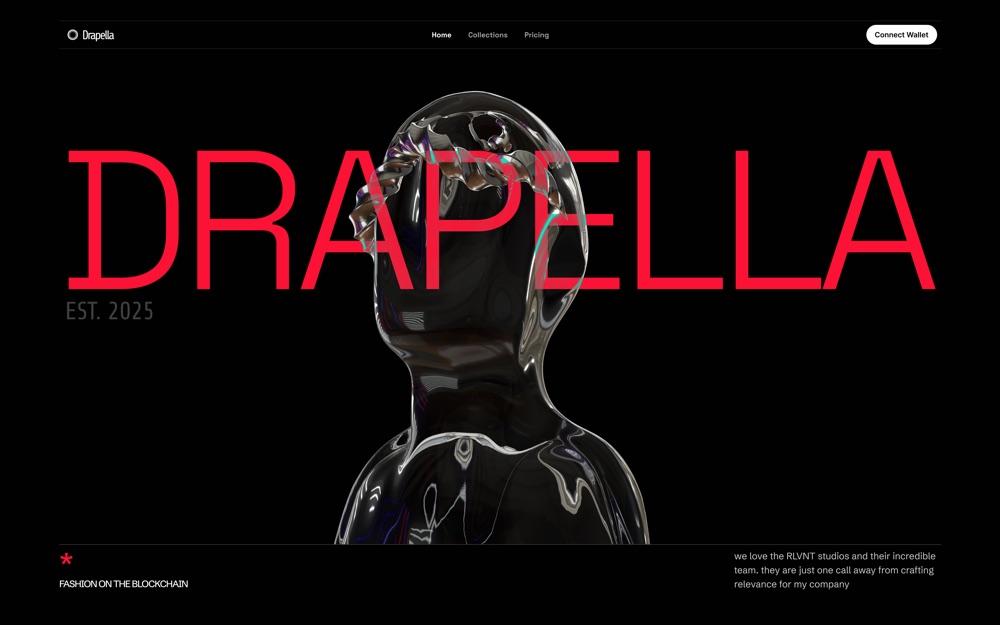
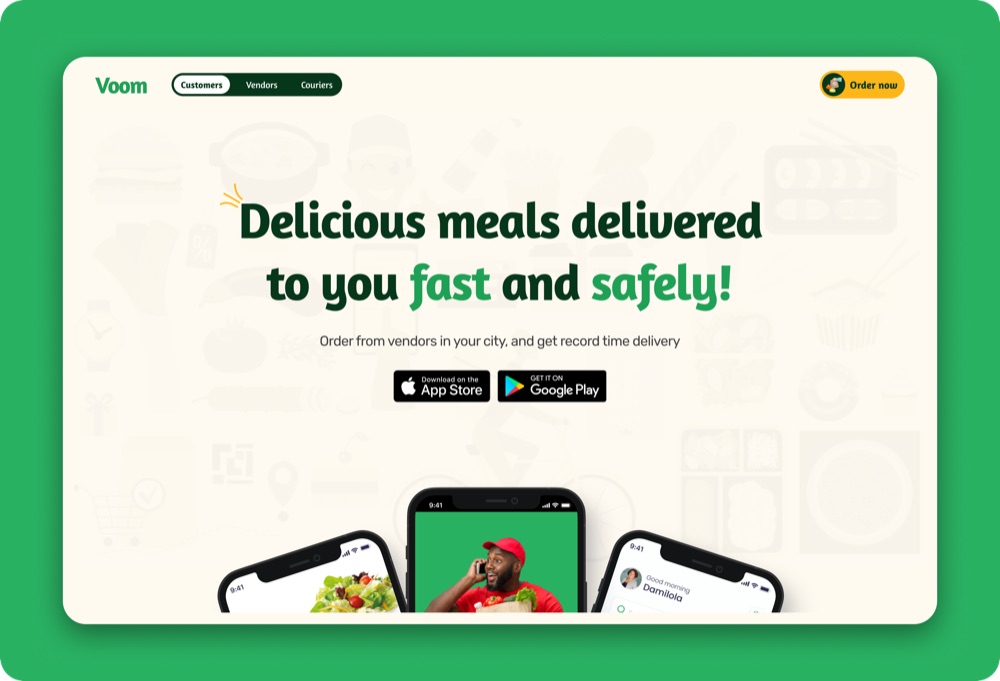
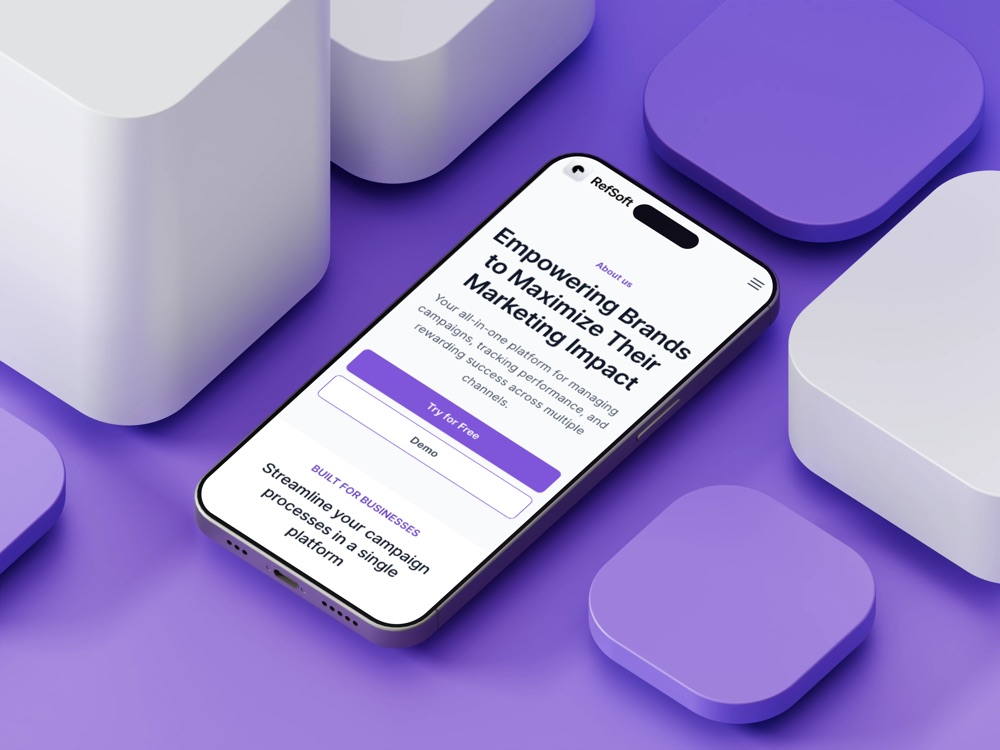
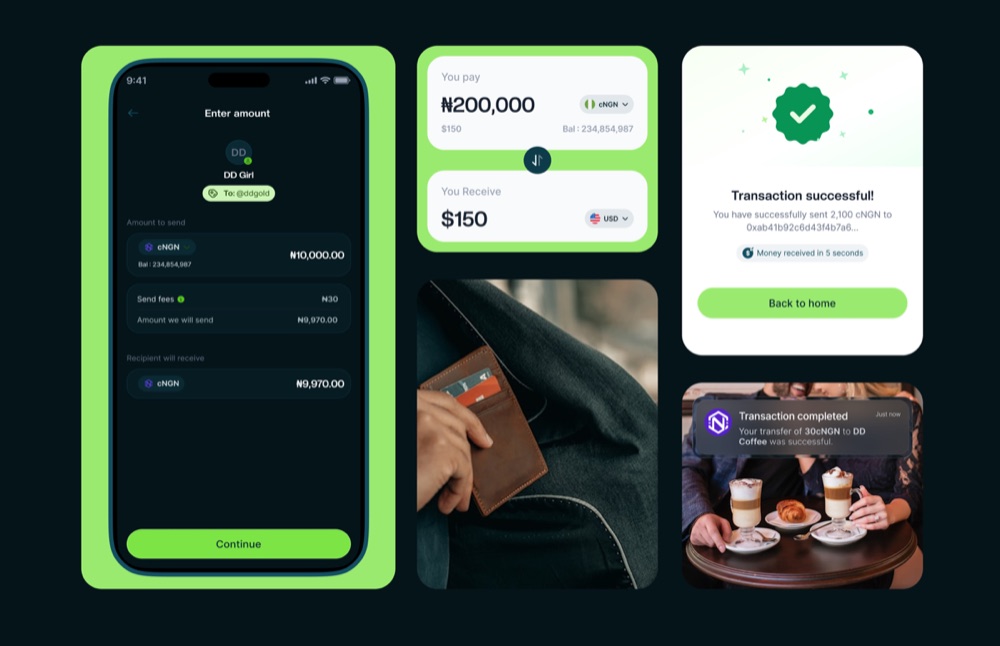
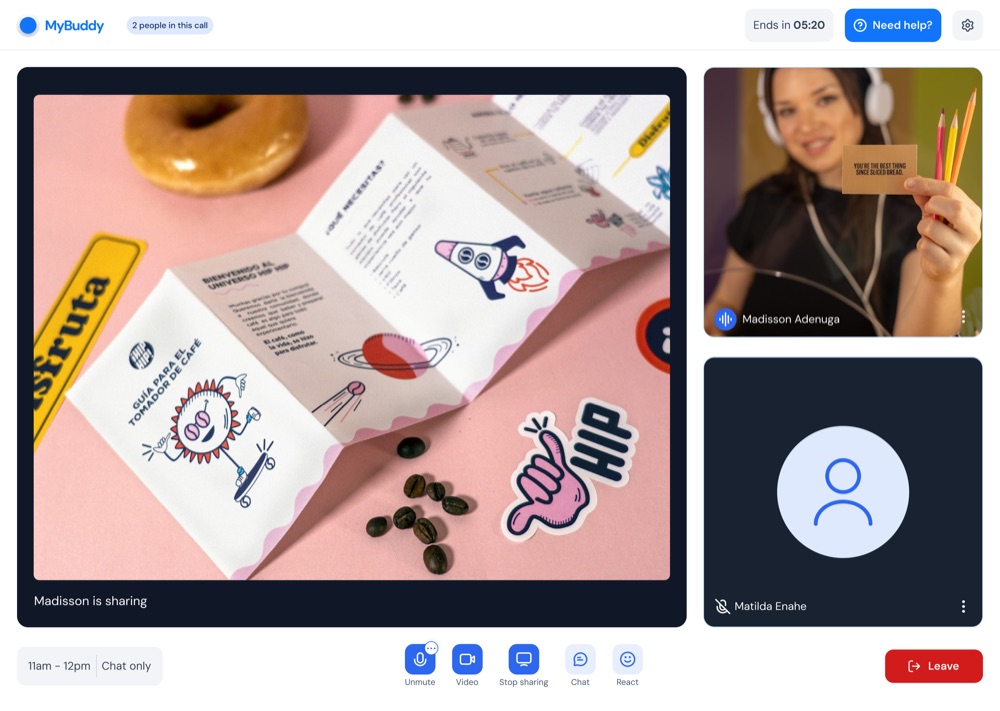

HIGHLIGHTS
[ VIEW MORE WORKS ]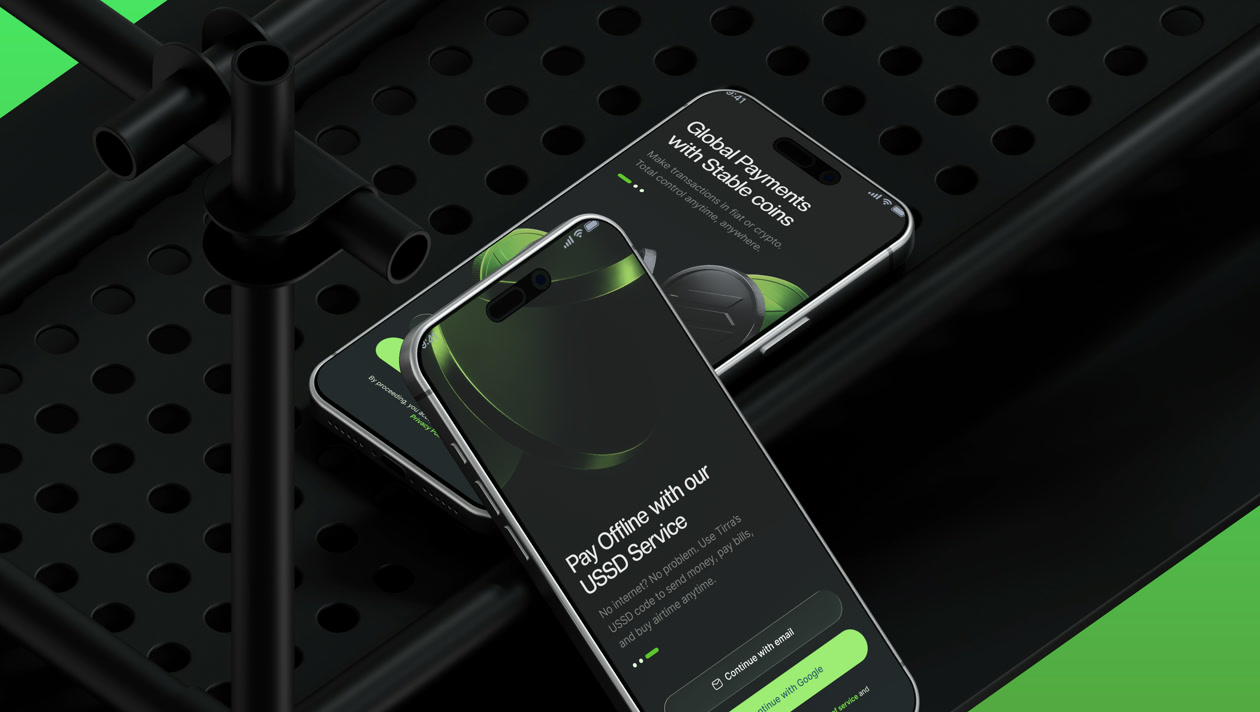 Fintech
01 / 06
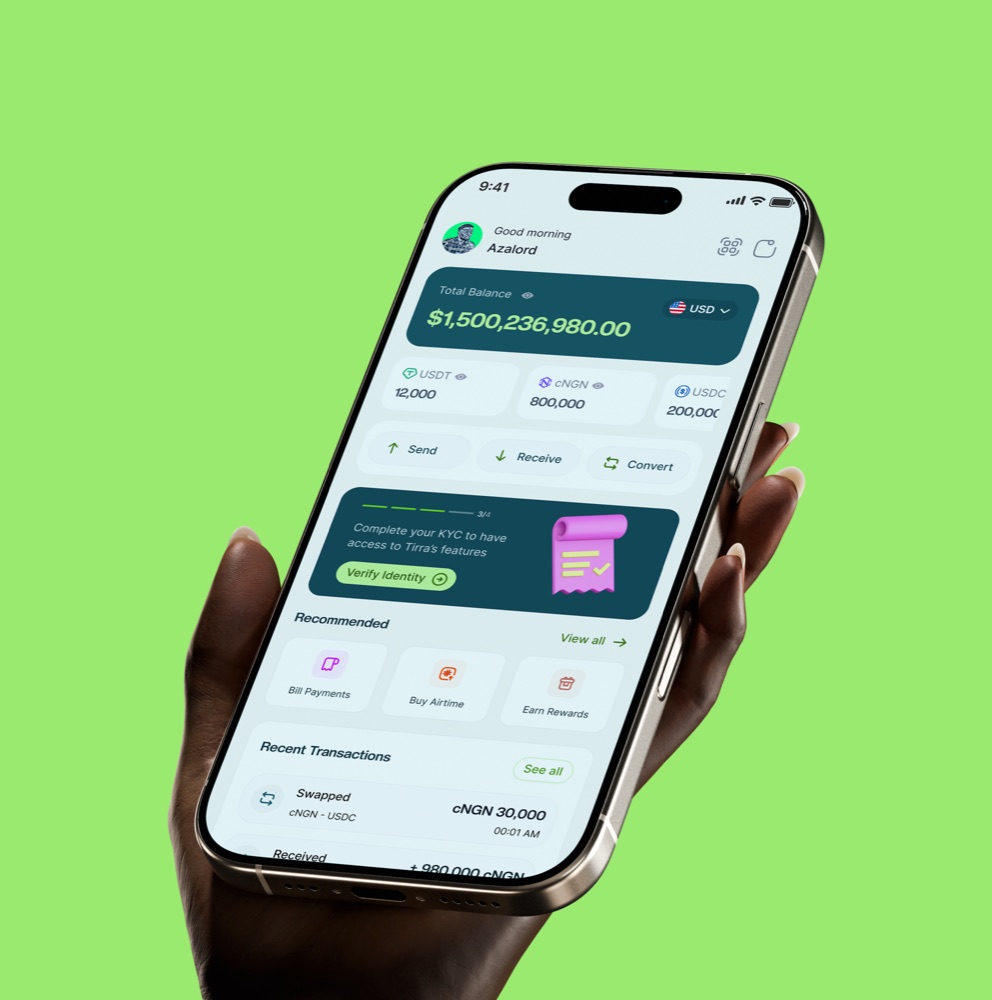
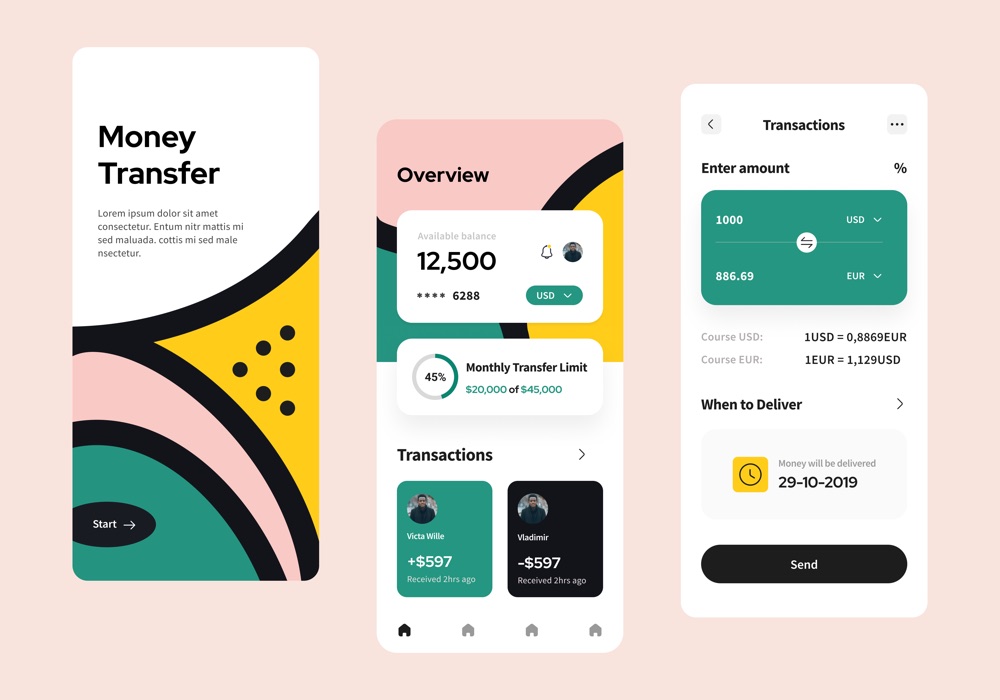
Tirra
600+ waitlist · 1k+ beta transactions
02 / 06
MSQ Design System
40% faster design-to-development handoff
03 / 06
MUST Fintech
Leading 2 Web3 products and a shared token ecosystem
 Brand & Web
04 / 06
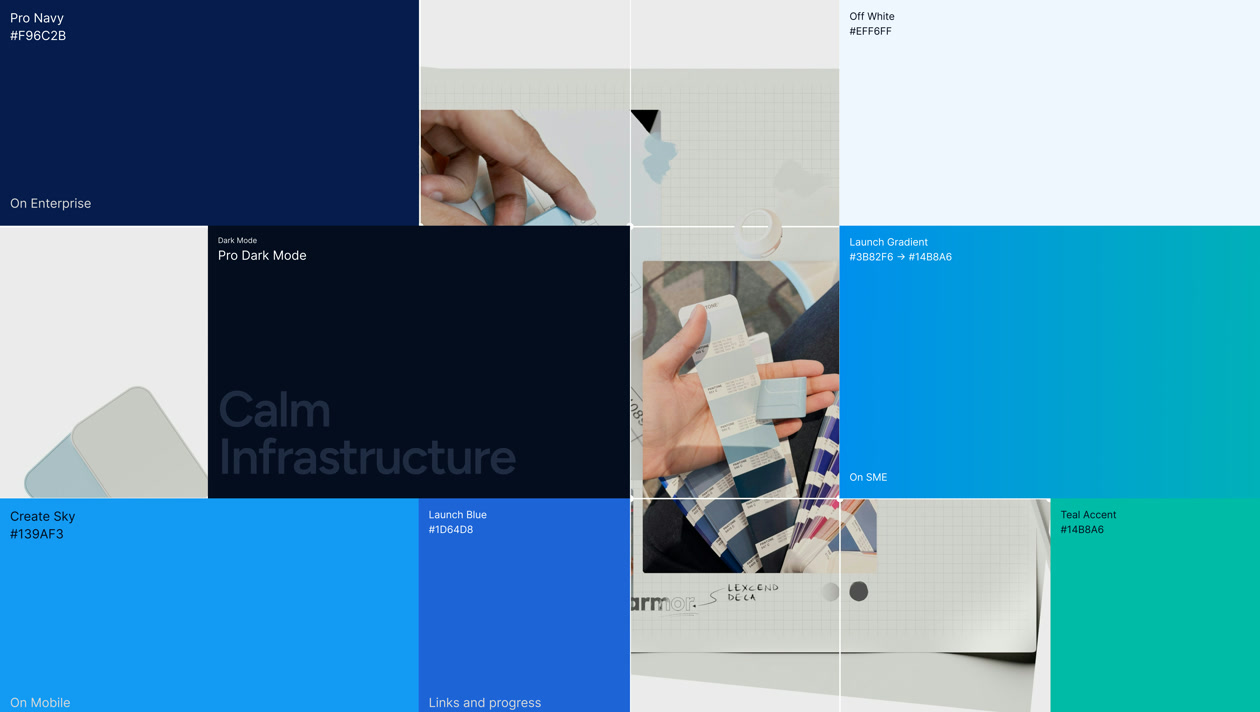
Wowzi Brand System
One brand system across 3 products
 HR · Wellness
05 / 06
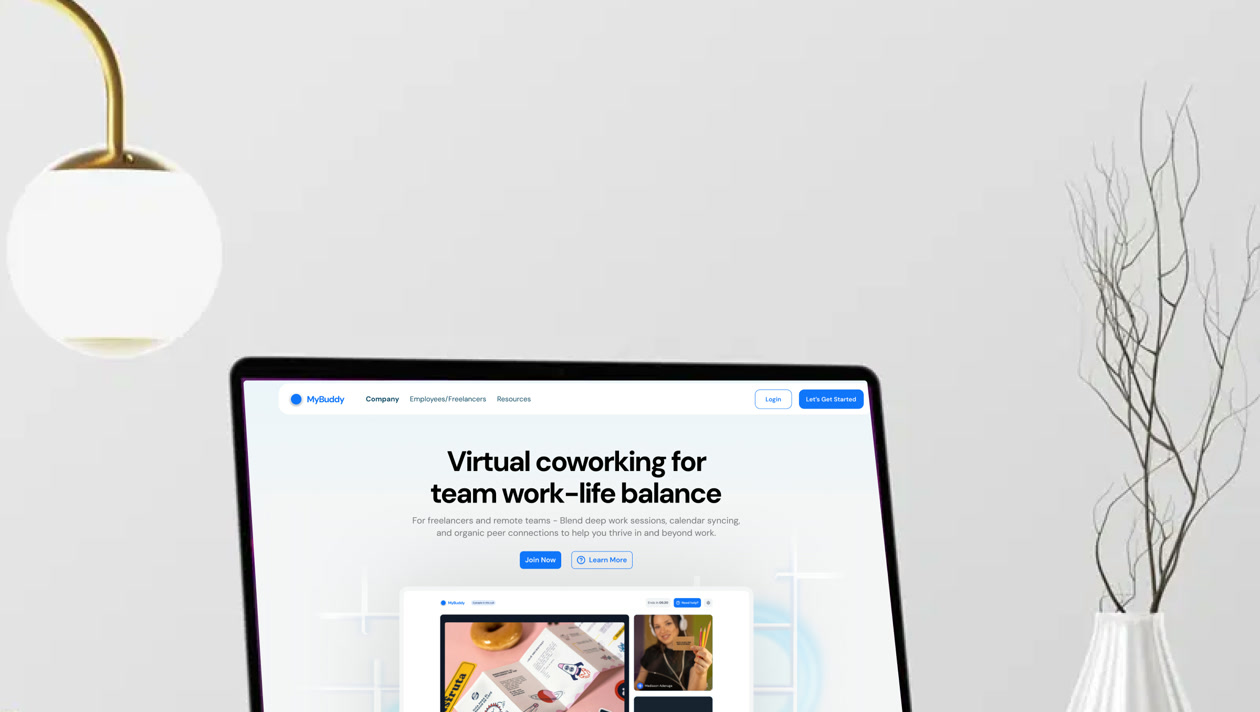
Buddily
Ethical virtual coworking across 3 user experiences
 SaaS
06 / 06
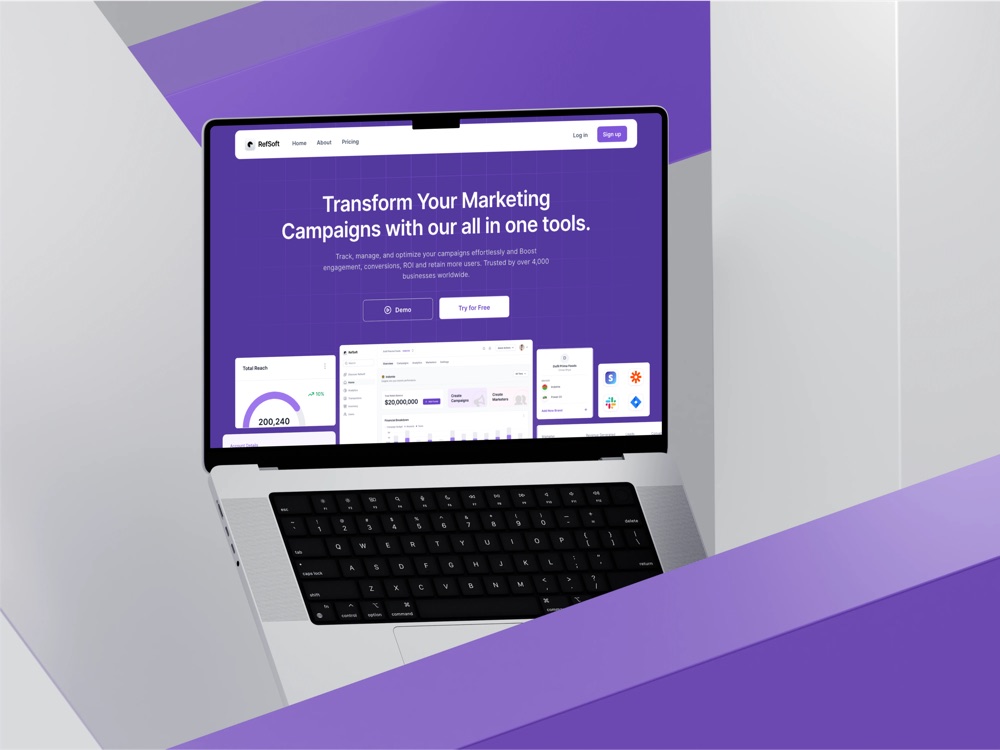
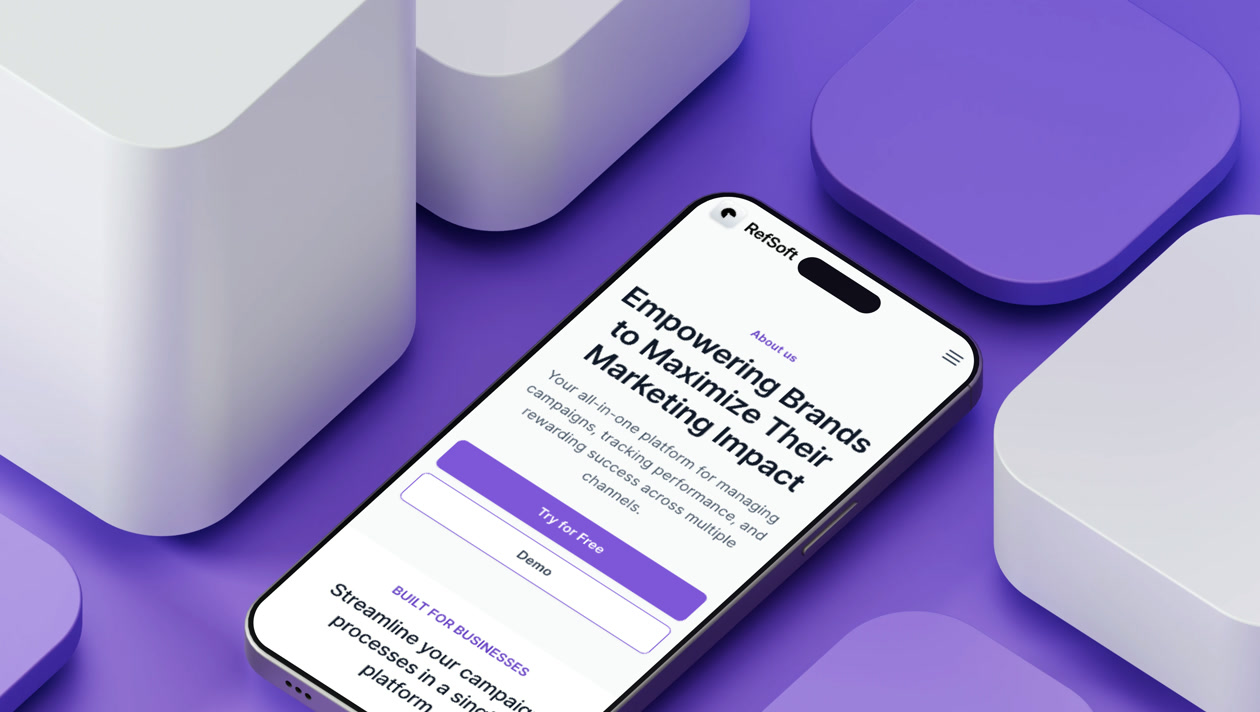
Refsoft
Marketing operations across campaigns and ROI

Hi, I'm Matilda Anashie. I design digital products, explore emerging tech, and care deeply about building things that genuinely help people.

Slice of me

Open to product design leadership opportunities and collaborations across fintech, AI, and emerging technology.
Let’s Talk.
Selected work
Hiring or building? Let’s talk
 Web Design
01 / 09
Folde Studio
A scalable sales and publishing system
Fintech02 / 09
Tirra
600+ waitlist · 1k+ beta transactions
03 / 09
Wowzi
500+ SME accounts · 40% faster campaign setup
04 / 09
MUST Fintech
Leading 2 Web3 products and a shared token ecosystem
05 / 09
MSQ Design System
40% faster design-to-development handoff
Brand & Web06 / 09
Wowzi Brand System
One brand system across 3 products
HR · Wellness07 / 09
Buddily
Ethical virtual coworking across 3 user experiences
SaaS08 / 09
Refsoft
Marketing operations across campaigns and ROI
 E-commerce
09 / 09
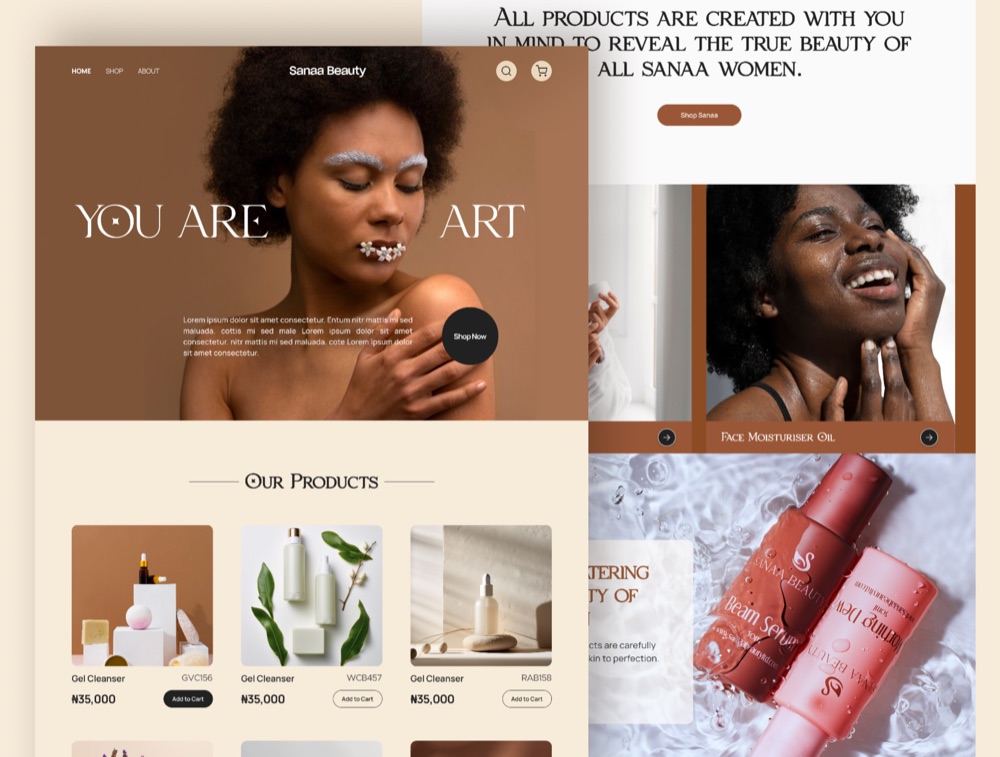
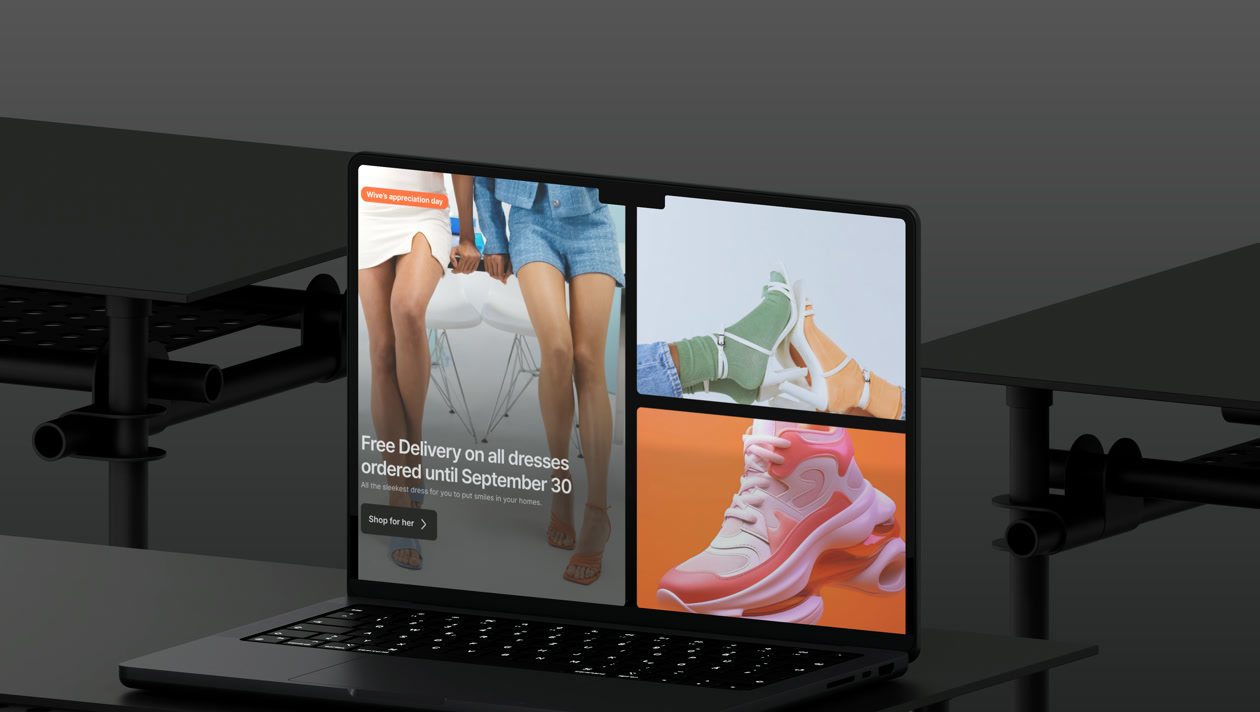
TAJRR
Two-sided commerce across web and mobile
Open to product design leadership opportunities and collaborations across fintech, AI, and emerging technology.
Let’s Talk.

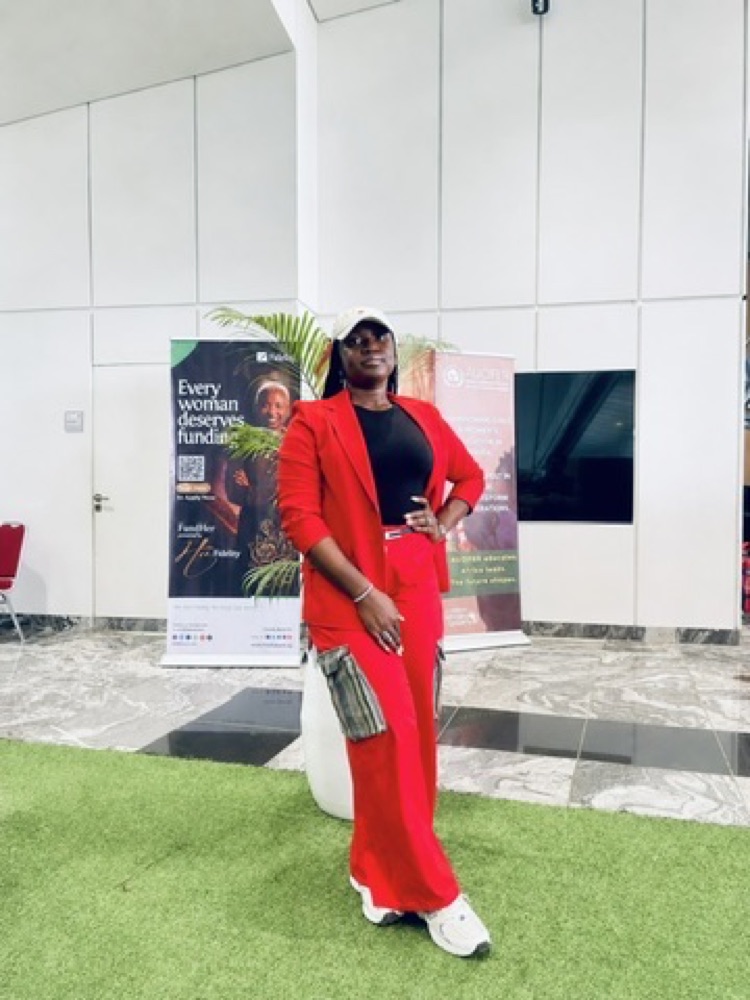
Hi, I'm Matilda Ipeh Anashie
I'm a Nigerian Product Design Lead with 6+ years of experience designing AI, fintech, creator economy, SaaS, and Web3 products across Africa, Asia, and Europe.
My background in Electrical and Electronics Engineering and Telecommunications Engineering shapes how I work: understanding complex systems, finding the human problem within them, and building clear, trustworthy products. I currently lead product design for MUST Company’s Blockchain and User Experience Innovation Design team, guiding a four-designer team across two Web3 products, their websites, and a shared token ecosystem. I also introduced design-system and AI-assisted workflows that improved design-to-development handoff by 40%.
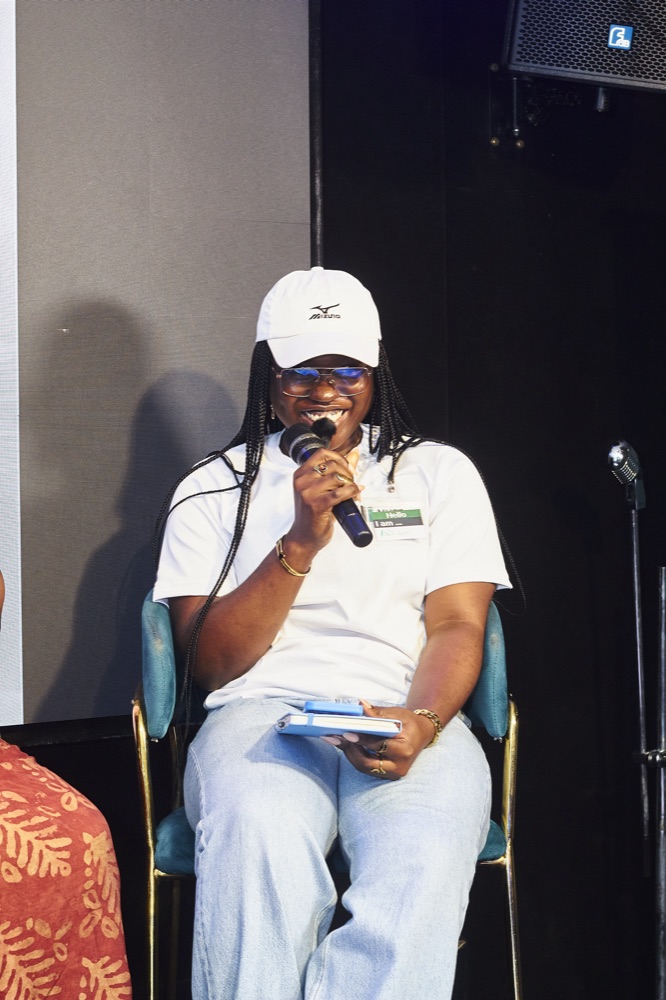
Beyond product work, I co-founded Canann Impact Foundation, contribute to open-source technology through Outreachy and ODK-X, and support the design community through mentorship, writing, and speaking.


My essays, notes, experiments, and opinions.
- read a new chapter

 fill journal pages
- disappear into a playlist

 draw or just doodle
- notice type everywhere

something happened today and I realised —
"Everything we need to be happy in life is right in front of us and yet we look for it in all the wrong places."
Living life in colours 🌻🦋

I love watching movies, but my latest obsession is K-drama. The stories and the acting keep me absolutely glued to my screen. A perfect weekend unwinding mood.
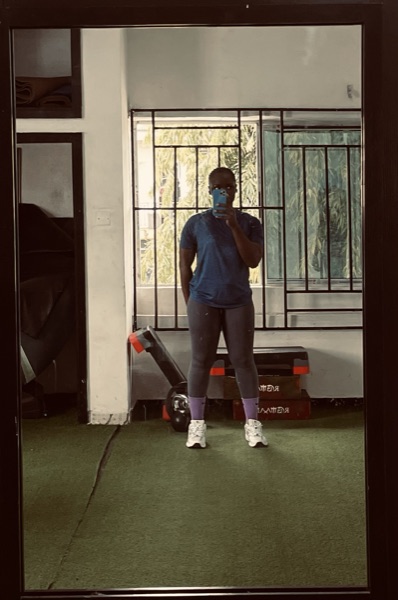
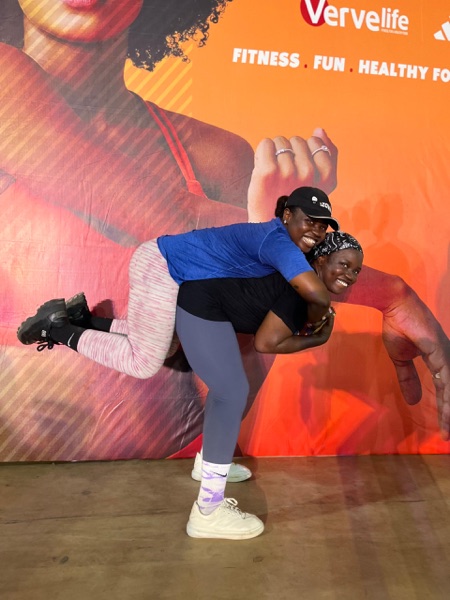
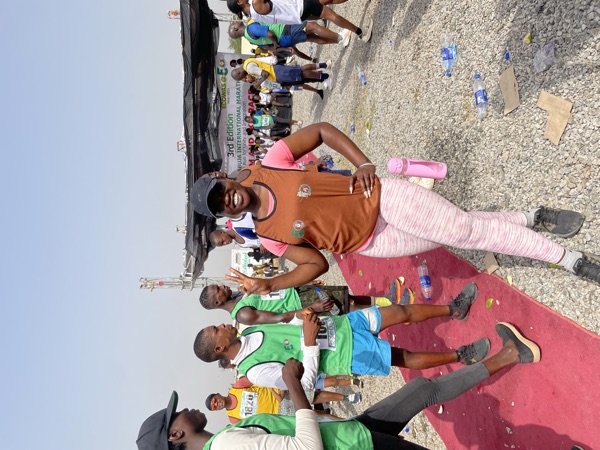
Open to product design leadership opportunities and collaborations across fintech, AI, and emerging technology.
Let’s Talk.

Bits of my life
From assisted to self-serve: redesigning Wowzi’s campaign experience.
I redesigned Wowzi’s advertiser and creator experience so campaigns were easier to launch, easier to staff with the right creators, and increasingly self-serve, for enterprise brands and SMEs alike.
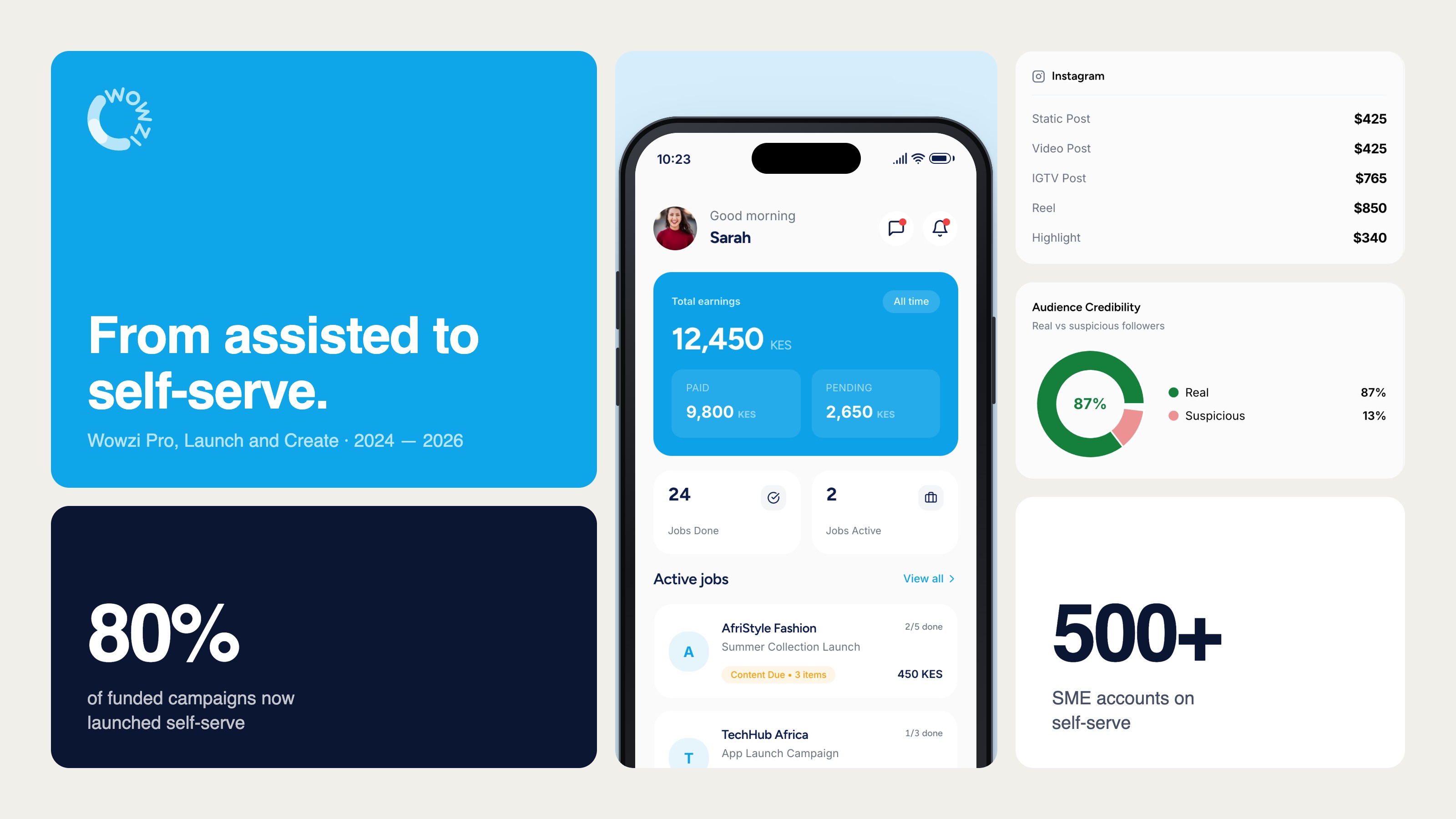
A marketplace with two customers who want different things.
Wowzi connects brands with creators across African markets. I joined as a junior product designer and was later promoted to lead product design across the creator, advertiser, enterprise and payment products.
The work touched nearly every part of the marketplace: how brands signed up, built campaigns, found creators and paid for them, and how creators got verified, priced their work, accepted jobs and got paid.
Brands could create campaigns. Getting one live took too much help.
The friction sat in three places, and fixing one side of the marketplace could easily make the other side worse.
Campaign setup took too long, finding the right creators was hard, and enterprise teams needed clearer, faster workflows.
Pricing was too rigid. Offers often didn’t match what creators expected, so good matches stalled between discovery, negotiation and acceptance.
Smaller businesses had to work out campaign setup, creator selection and payment on their own, without sales or back-office help.
The job wasn’t to redesign screens. It was to make the marketplace easier to run on both sides.
Research showed where the friction really was.
I led and contributed to research across 70+ participants, with additional sessions involving about 100 creators and 15 brands, and turned the findings into product strategy.
Large creator directories didn’t make discovery easier. Brands wanted proof a creator fit before they committed budget.
Campaign creation asked users to make too many choices before they had enough context to make them well.
Fixed offers left creators either underpaid or turning work down, so good matches still fell through.
For smaller businesses, a product that still needed someone at Wowzi to step in wasn’t really self-serve.
From an assisted path to one a brand can run alone.
Simplified view of the two journeys.
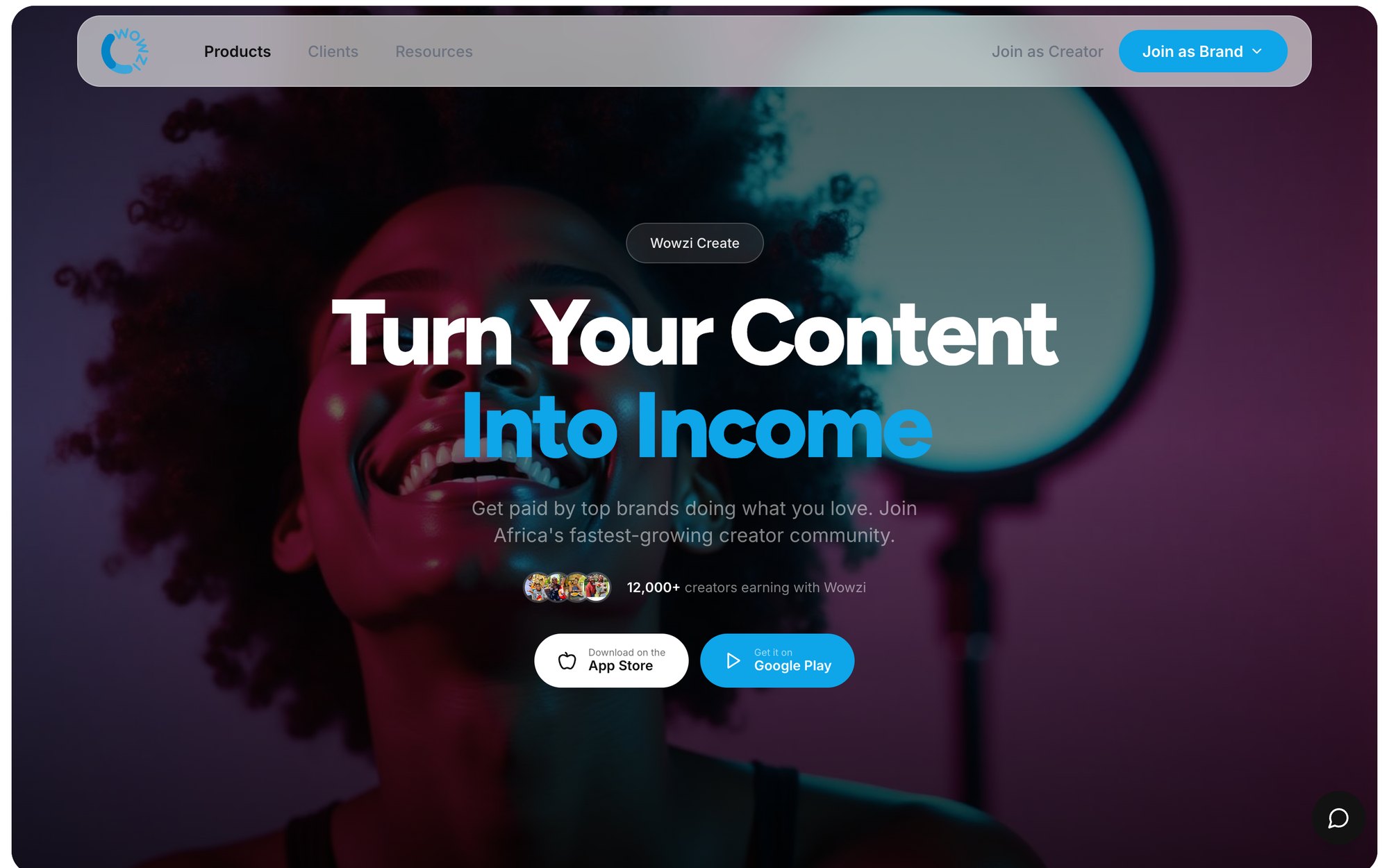
One site, three doors.
Self-serve starts before sign-up. Enterprise teams, small businesses and creators all landed on the same wowzi.co, so the site had to sort them in the first scroll and send each one to the product built for them: Pro, Launch or Create.
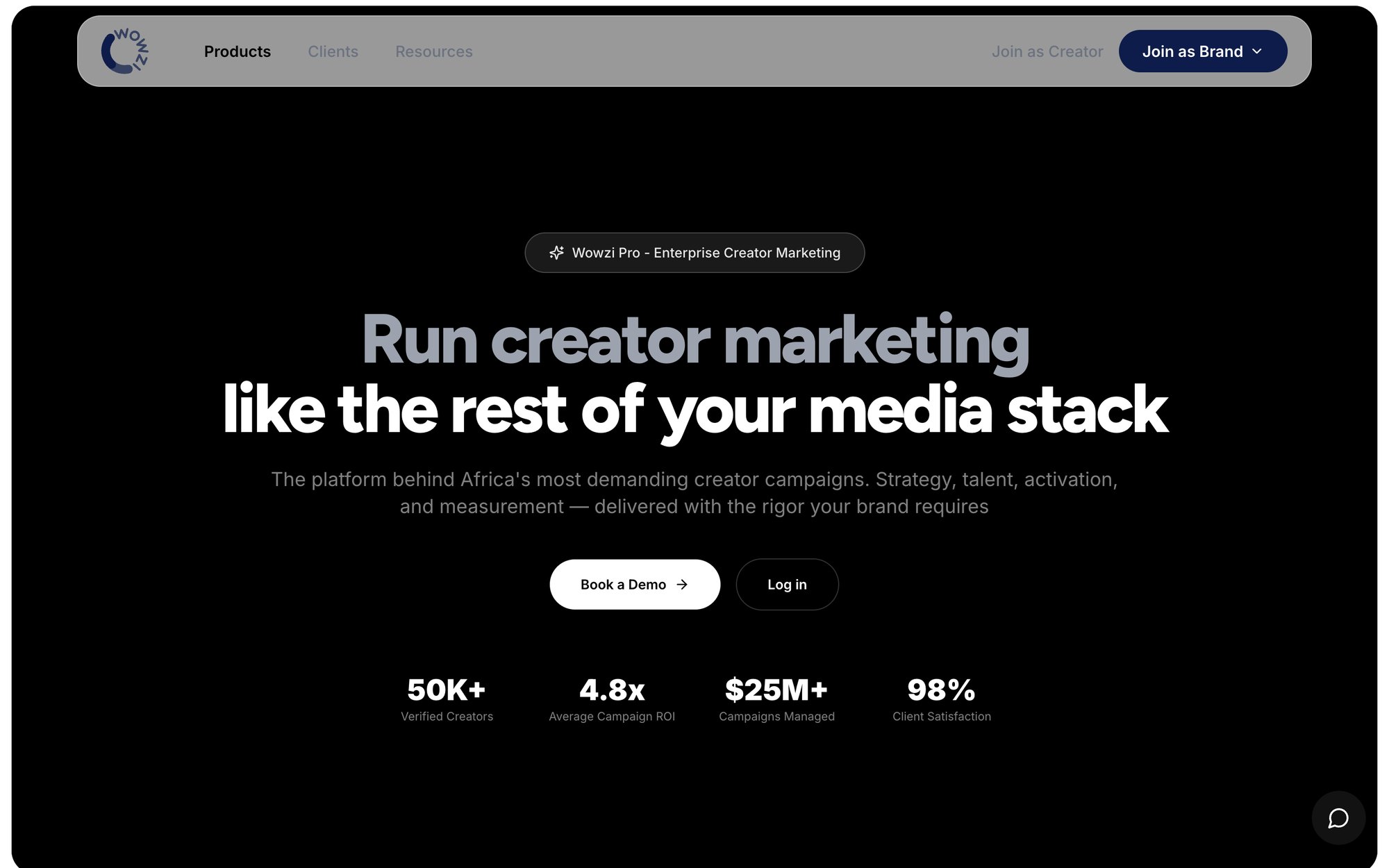
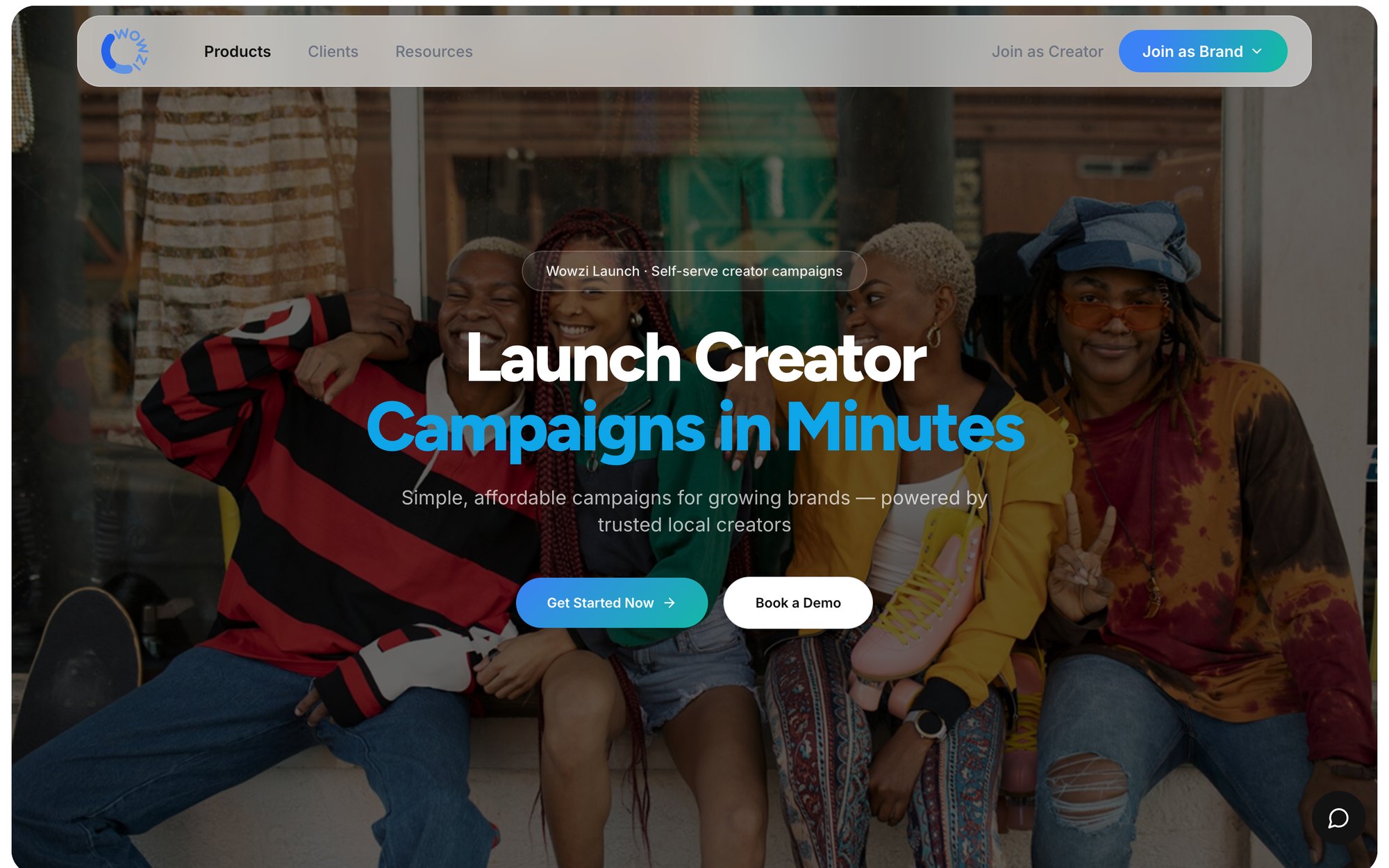
Big teams get a conversation. Small teams get the keys.
Sign-up asks for company size alongside the basics, and scores the lead before the first screen loads.
Larger teams are steered to a 30-minute demo as the recommended path; smaller ones can start a 14-day trial with sample campaigns straight away.
Booking the demo happens inside sign-up, with the team’s current approach and budget captured for the sales call.
Make creator discovery intentional, not a catalogue.
The original experience treated discovery like browsing a large catalogue. We moved to a focused model: stronger filters and plain-language search, curated creator groups, and direct invitations into campaigns.
The goal wasn’t to show brands more creators. It was to help them reach a smaller, more relevant set faster. This was part of the wider redesign of onboarding, campaign creation and discovery that cut campaign setup time by 40%.
Give creators control over price, and brands a budget they can trust.
Instead of relying only on fixed offers, we introduced creator-set rates and negotiation. Creators got a say in what their work was worth; brands still planned against a campaign budget they could watch being spent.
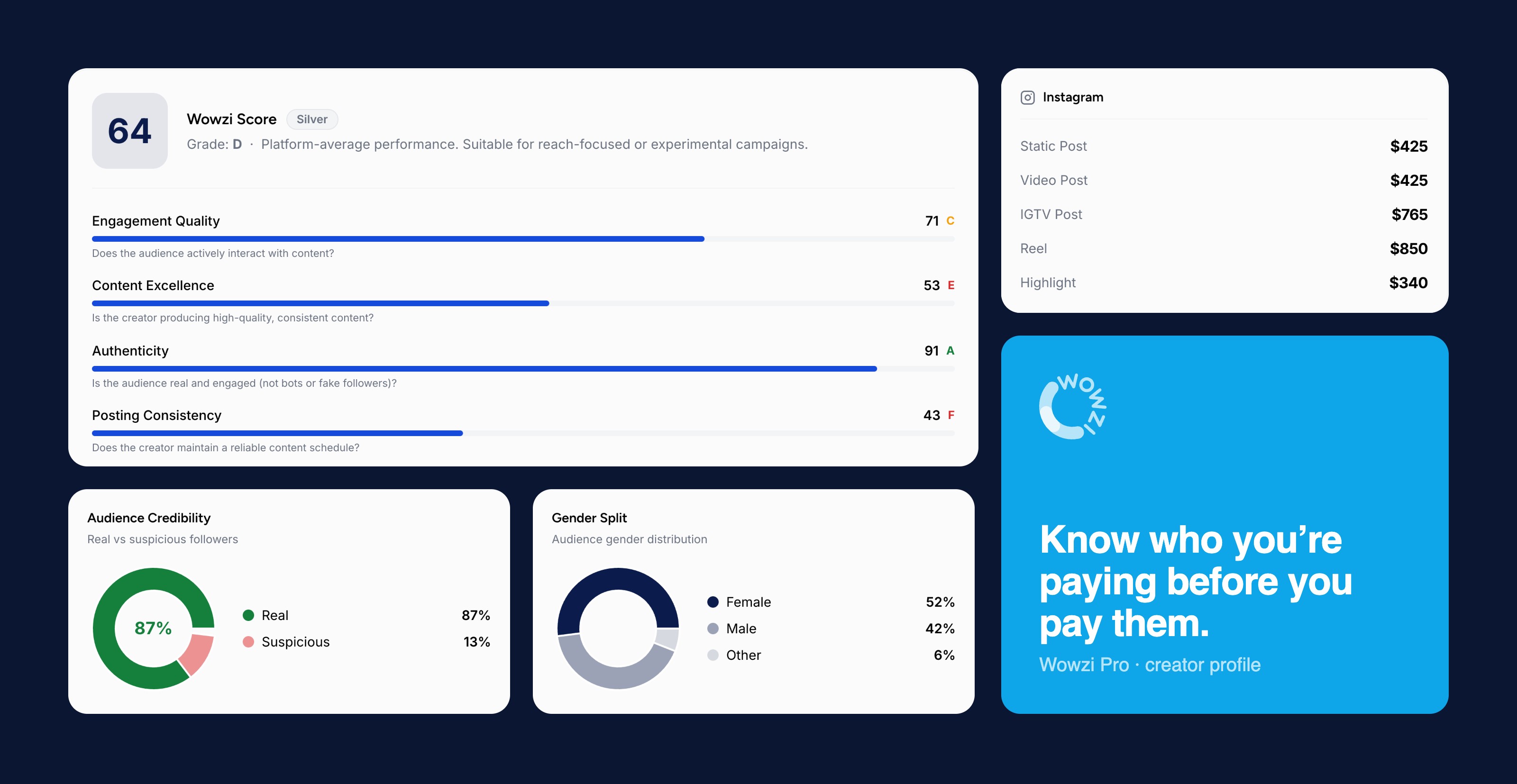
Creators set the price. The product shows them where it sits.
Every format gets its own rate, prefilled with a suggestion from the creator’s followers, engagement and the market.
The label updates as they type: below market, competitive, above market. Charging more is allowed; it’s just never a surprise.
Rates set here are what brands see at selection, so negotiation starts from the creator’s number, not a blank offer.
Turn campaign creation into seven clear steps.
Campaign setup used to ask for everything at once. I broke it into a guided sequence (strategy, brief, creators, deliverables, content calendar, contracts, launch) where each step has one job, progress is saved, and optional steps can be skipped.
Make SME campaigns fully self-serve.
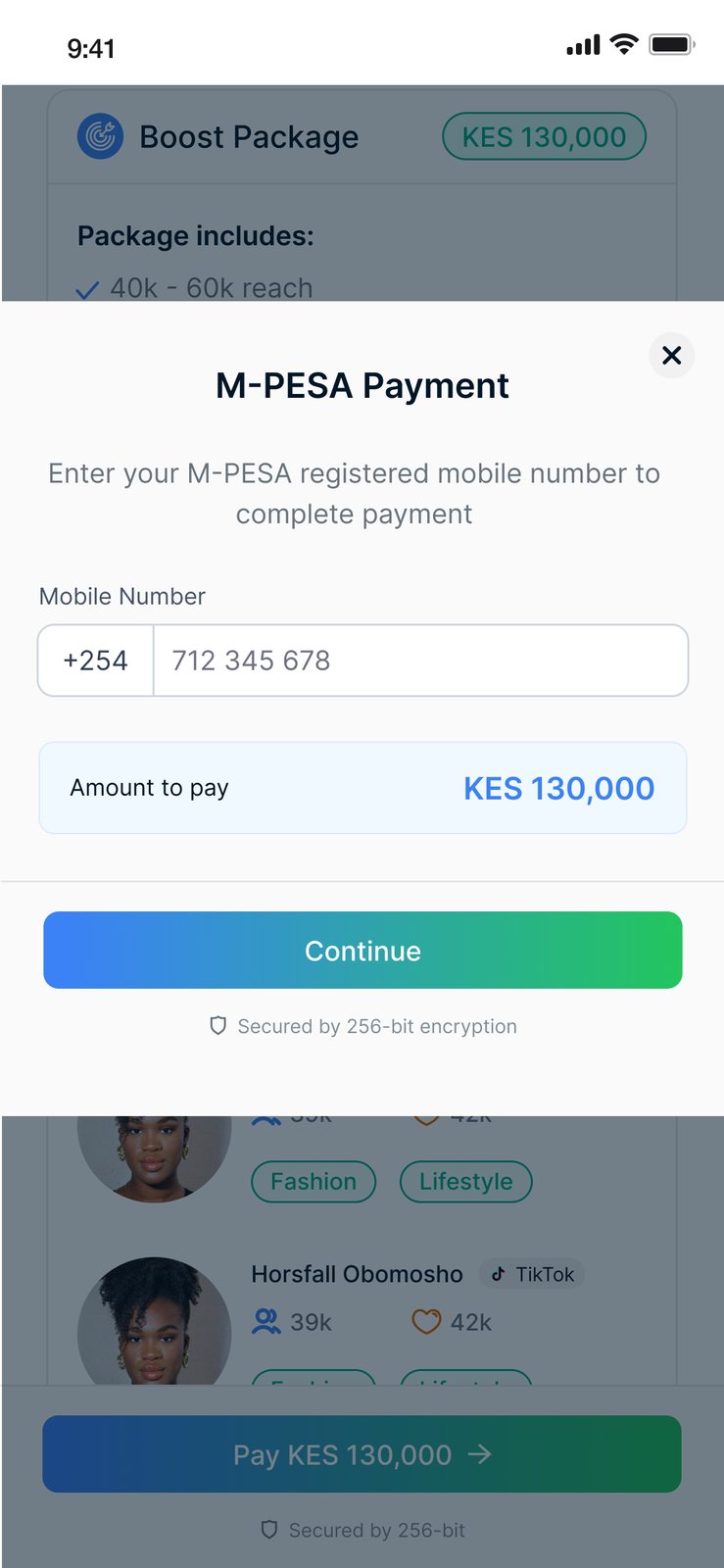
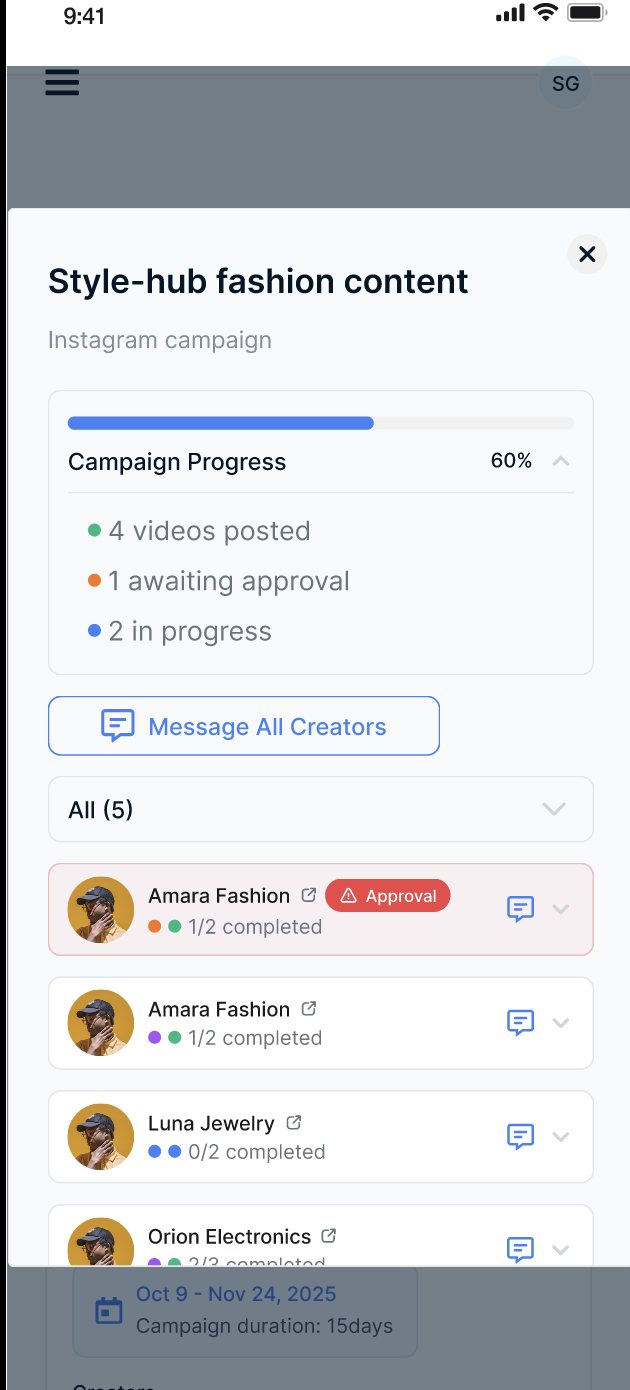
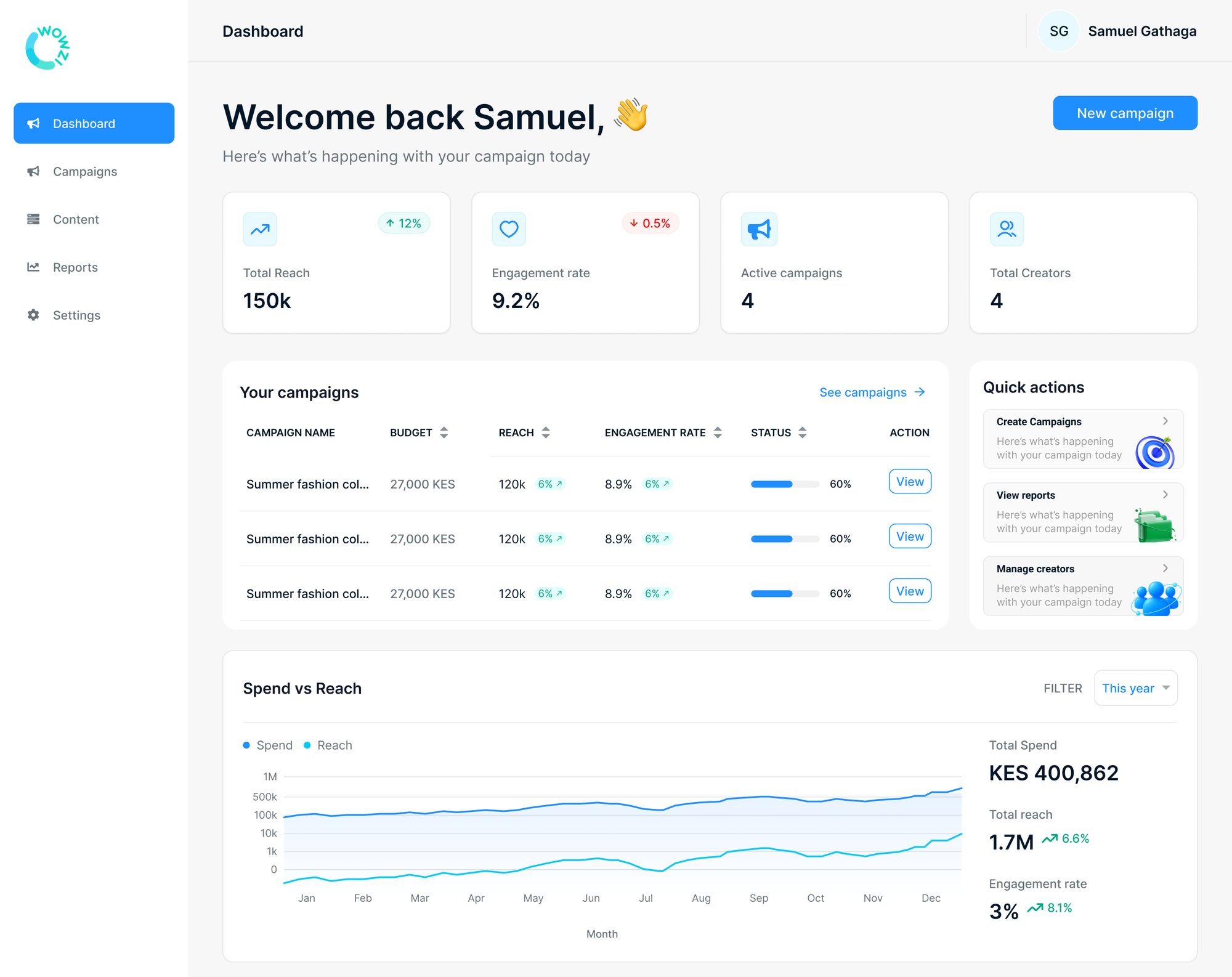
For SME customers the bigger challenge was removing the need for sales or back-office help. I designed Launch, Wowzi’s self-serve product for SMEs, end to end: campaign setup, creator selection, campaign details, budget and brief, and a self-serve checkout.
The aim was for a customer to go from creating an account to a funded campaign without anyone at Wowzi stepping in. For an early-stage product, the completion rate was the clearest sign that the experience could stand on its own.
Creators run the other half of every campaign.
Every brand decision lands on a creator’s phone. Wowzi Create is the mobile app where creators get verified, set their prices, accept work and get paid. If any of those steps feels uncertain, the campaign stalls on the brand side too.
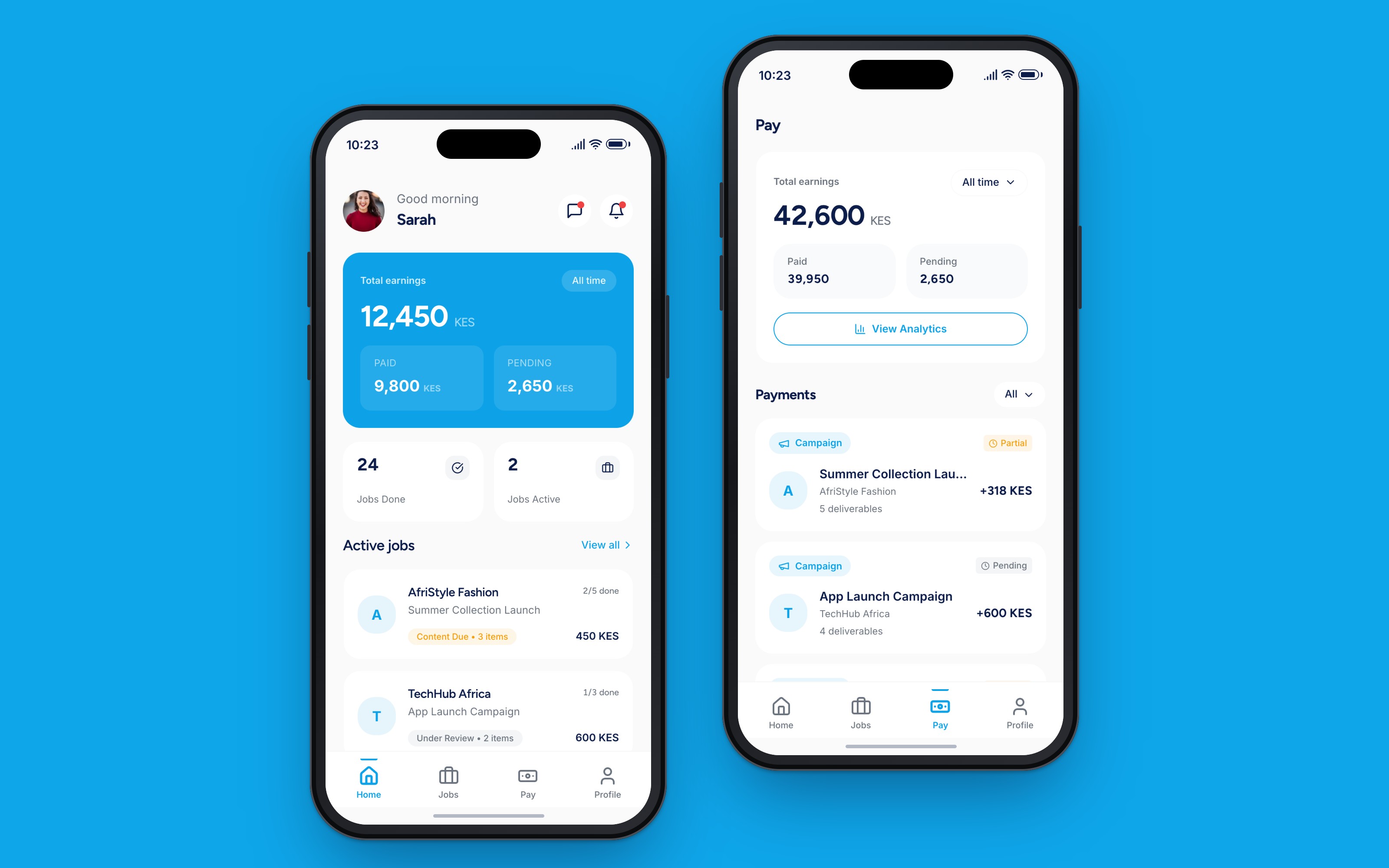
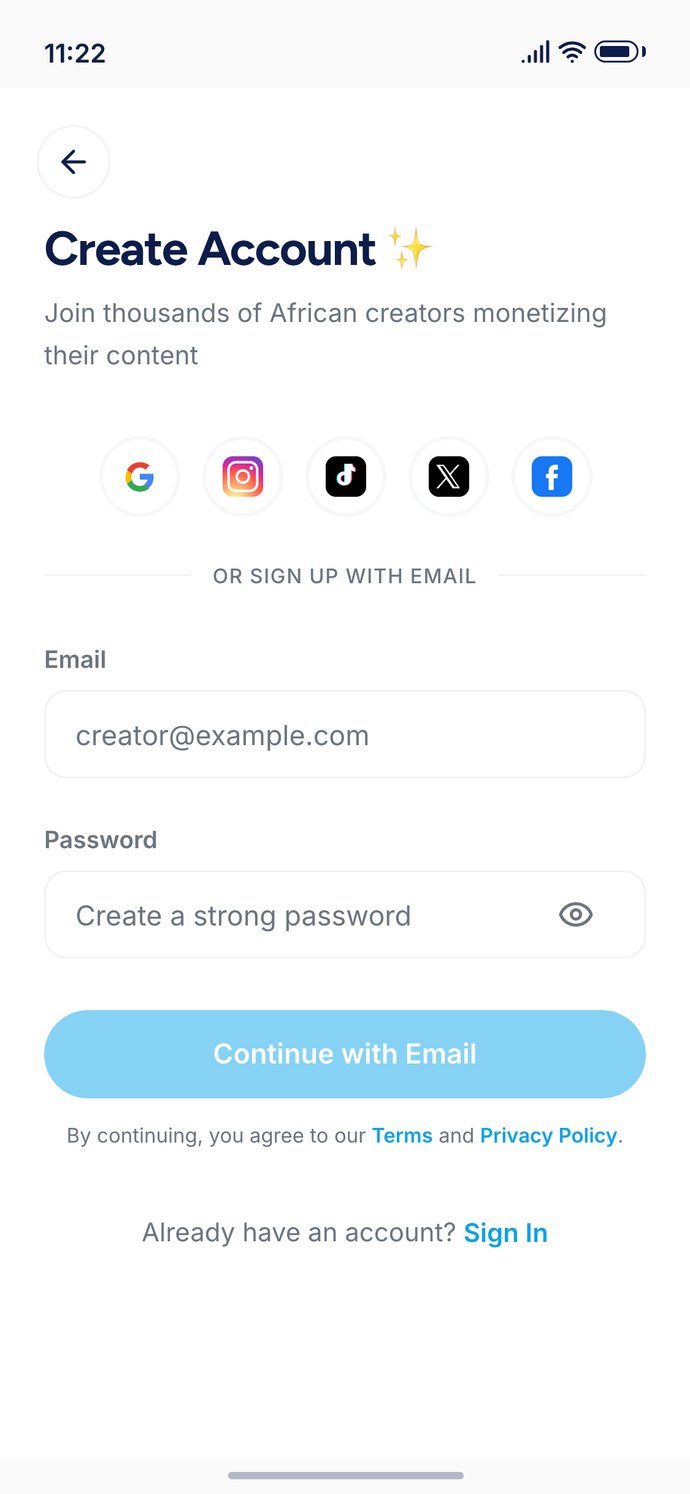
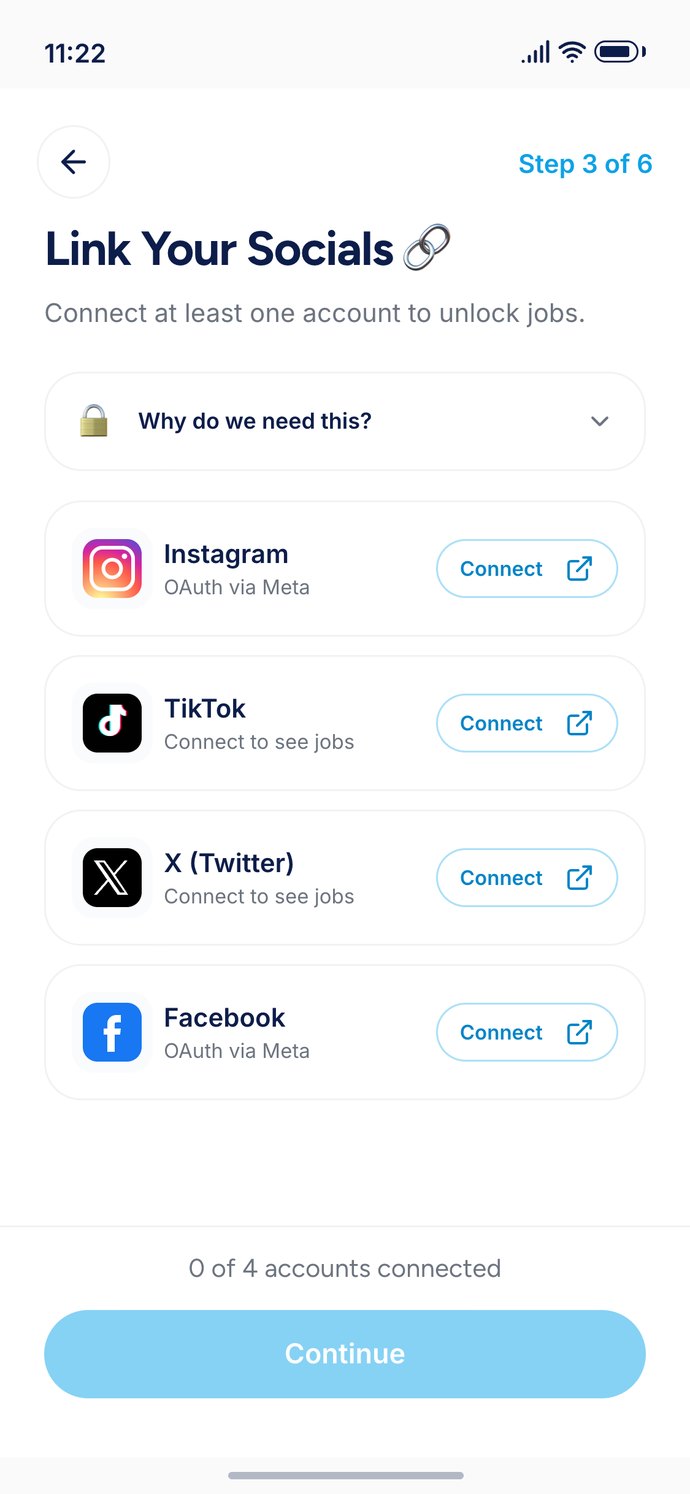
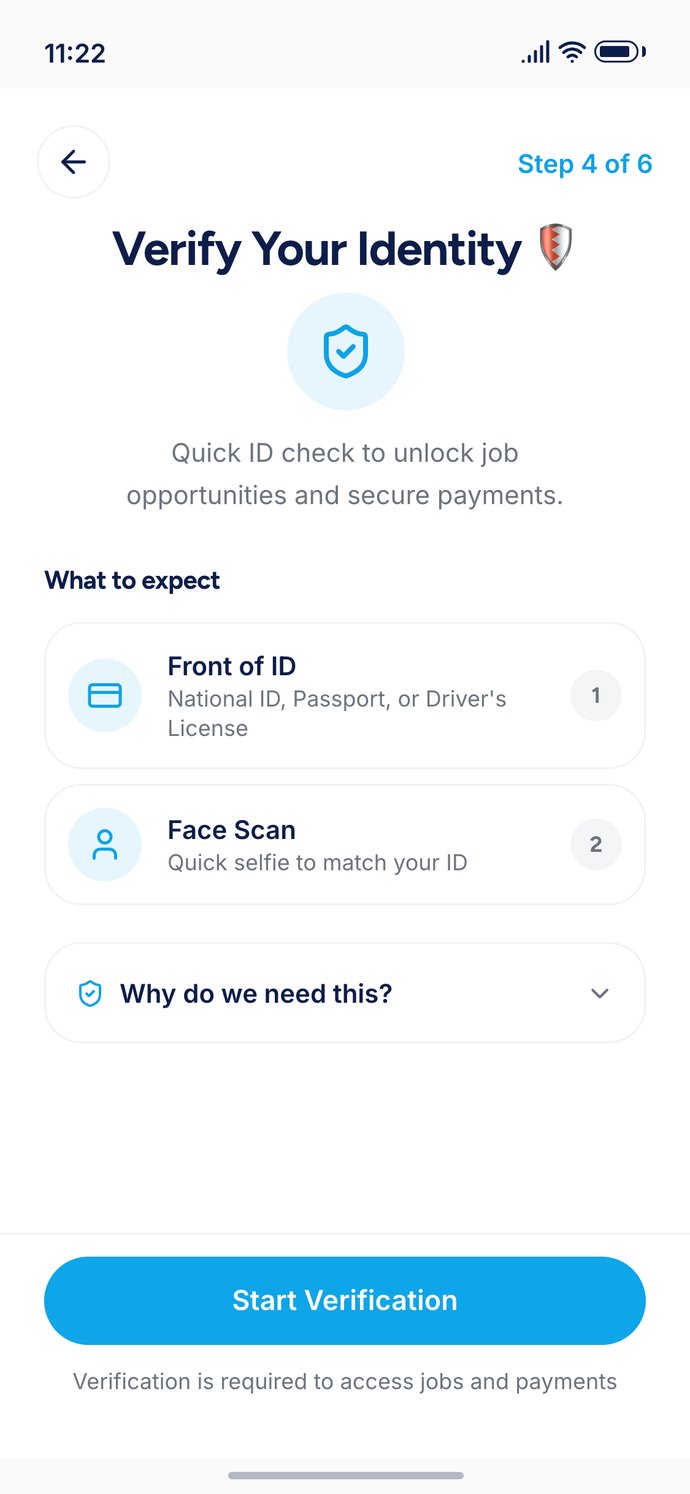
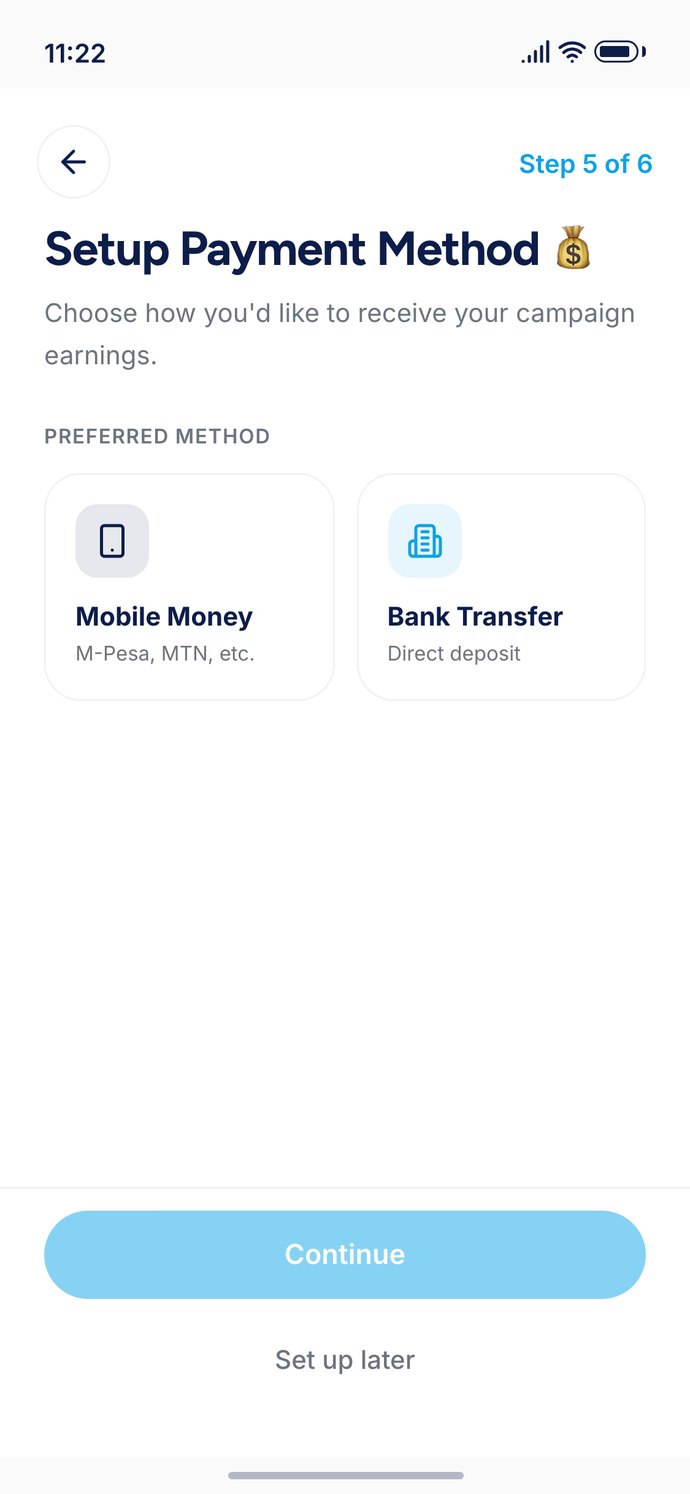
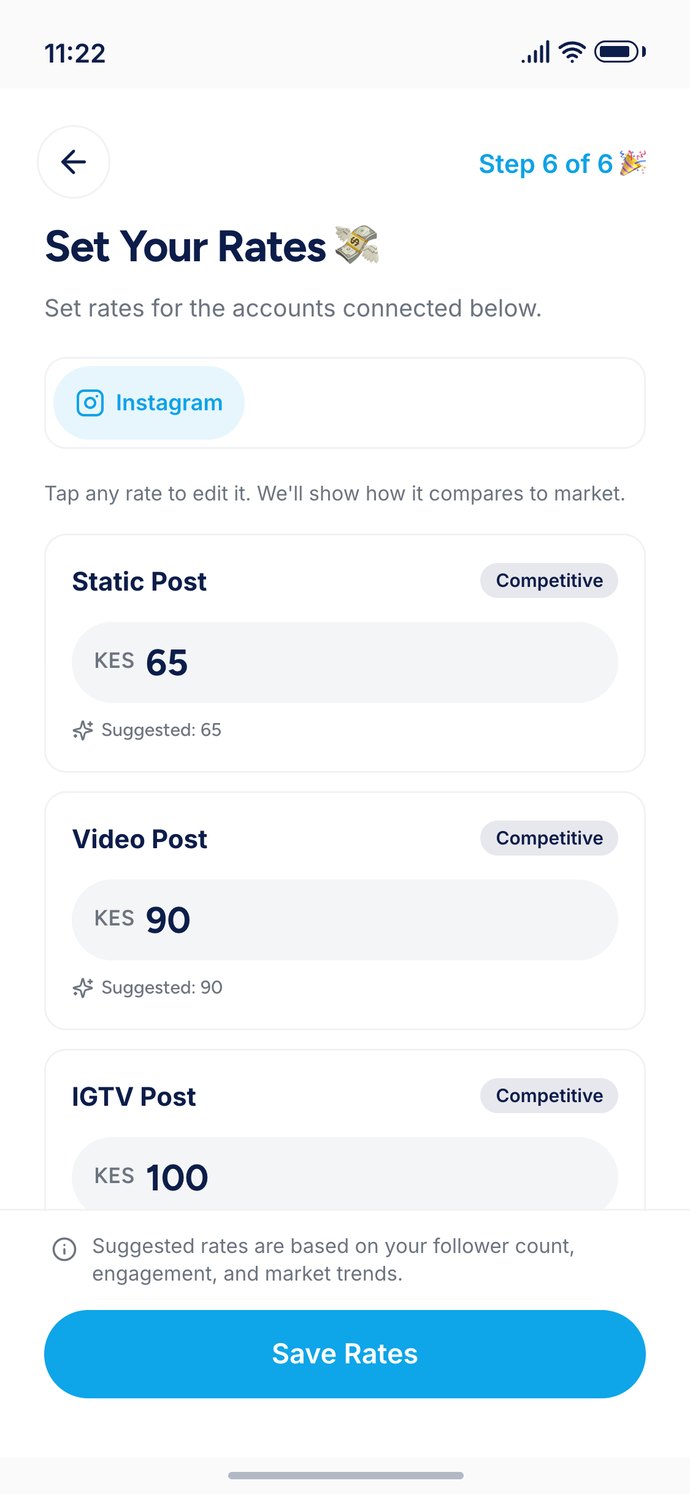
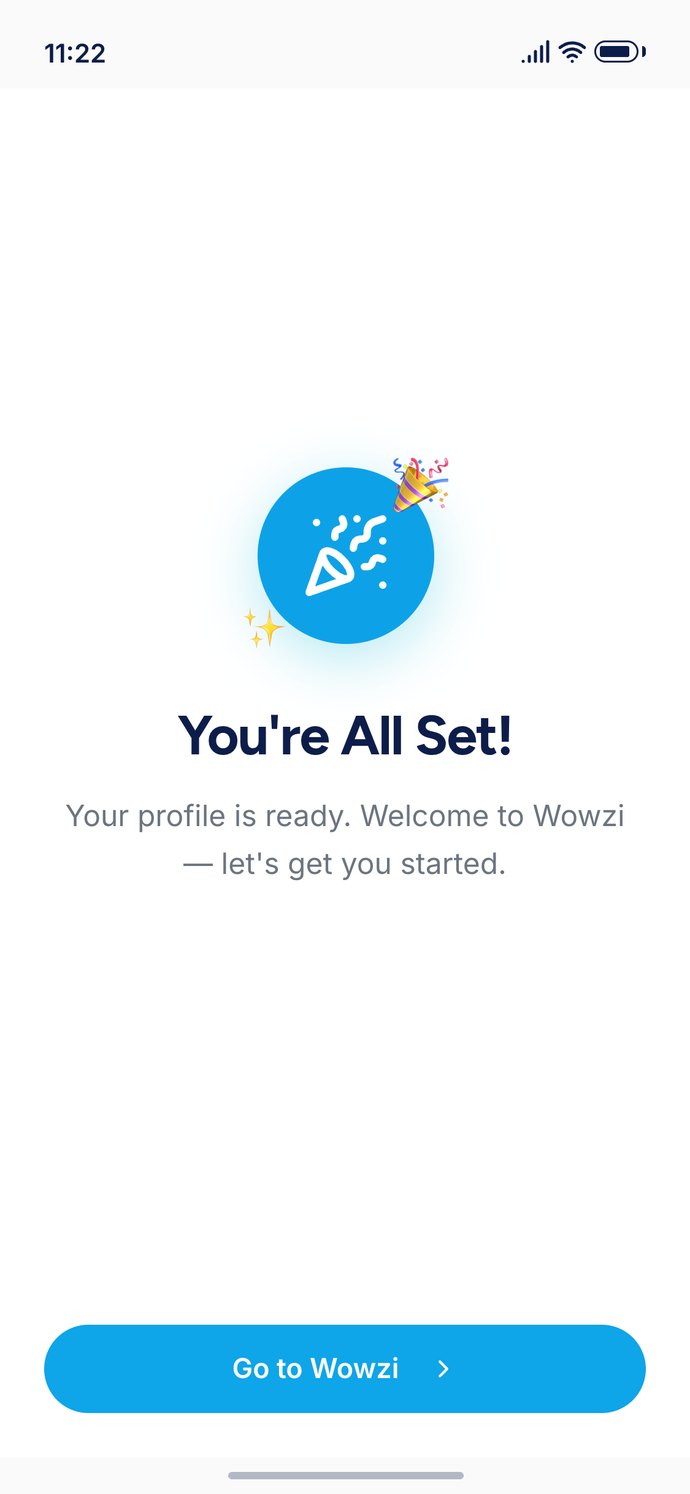
Verification, payout details and rates are collected once, up front, so a creator’s first offer can be accepted and paid without another round of paperwork.
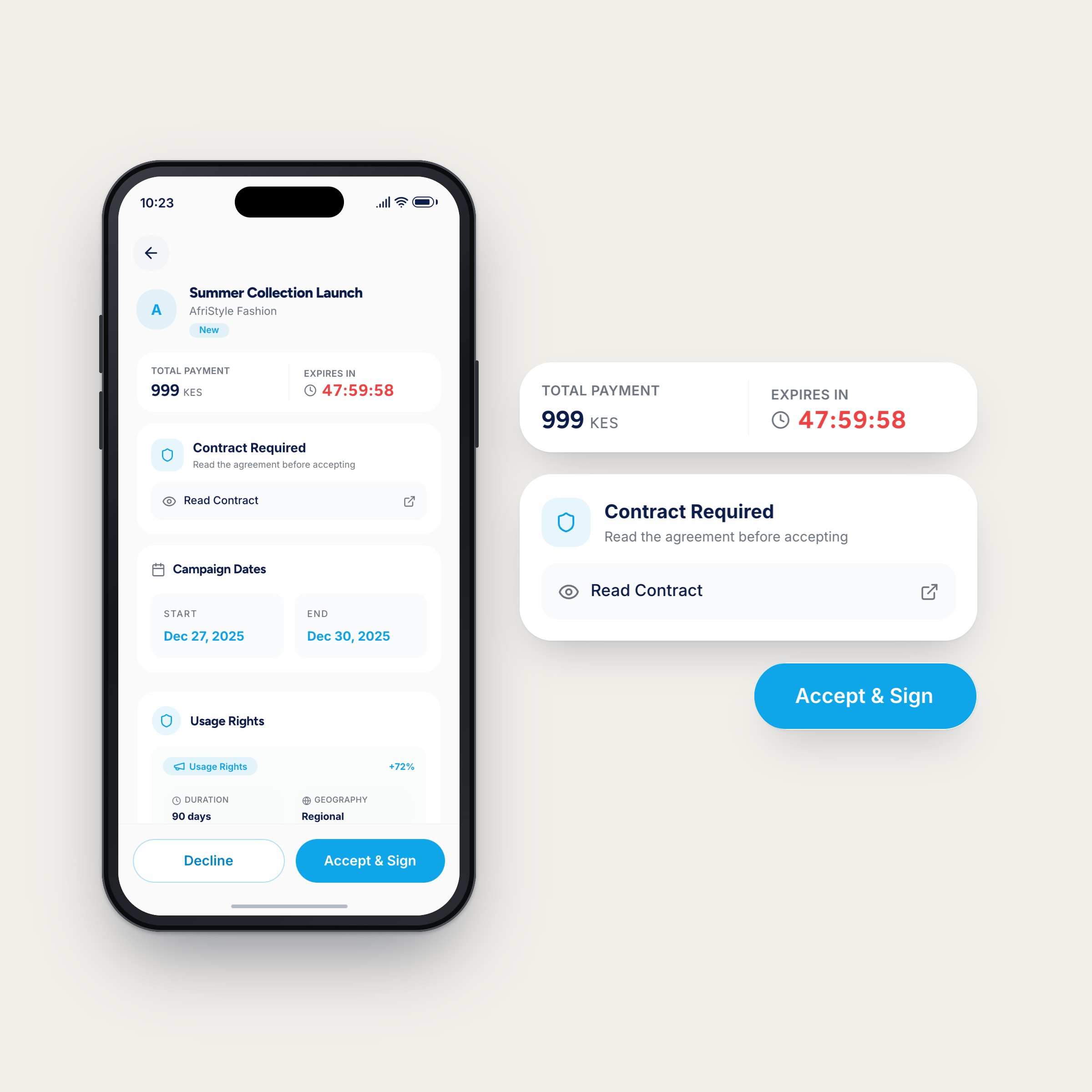
An offer should answer every question before the creator has to ask.
Fee, dates, deliverables and usage rights sit on one screen, with a clear expiry so offers don’t sit in limbo.
Usage rights are priced separately. A creator can see exactly what extra the brand is paying for paid ads or longer licences.
The contract opens in the app and is signed digitally. No PDFs over email, no chasing signatures.
Build payments into the product, not around it.
I designed and shipped Wowzi Pay, an in-app creator wallet for direct payments, transfers and wallet-to-wallet transactions. Getting paid stopped being an admin step outside the product and became the last step of the campaign itself.
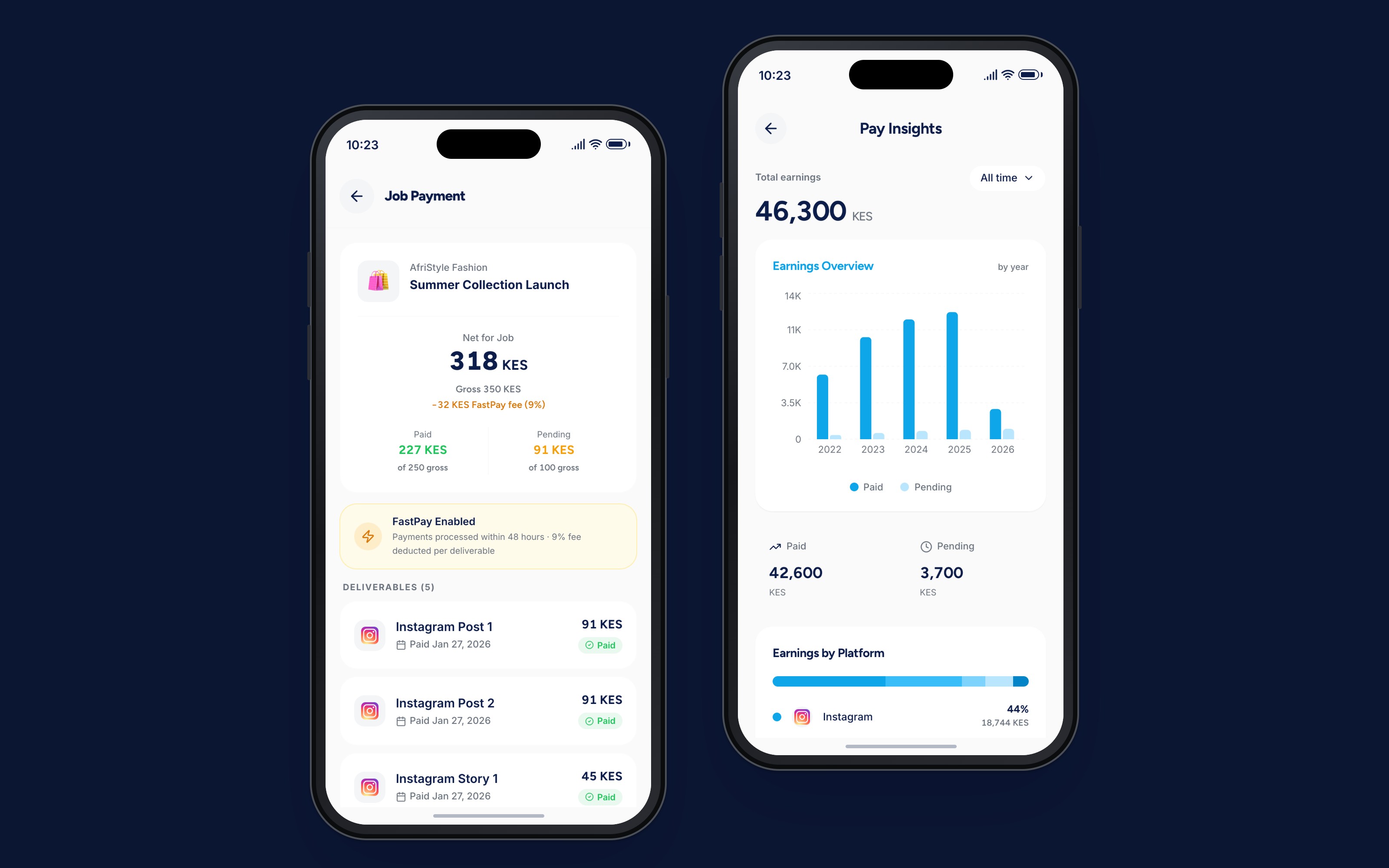
Creators should never have to ask where their money is.
Each payment is tied to the campaign it came from, with a status of paid, pending or partial.
A job payment breaks down gross, fees and net, then pays out per deliverable as each one is approved.
FastPay is labelled where it applies, with its fee shown before the money moves.
Answers brands used to ask an account manager for.
Self-serve doesn’t stop at launch. Brands needed to see what their money was doing without waiting for a report. Reporting brings campaign performance, creator rankings and brand safety into one place, with an AI analyst that answers questions about a campaign in plain language.
Measurable change on both sides of the marketplace.
These came from onboarding, discovery, pricing, campaign creation and payments working together as one system, rather than from any single feature.
Discovery through engineering handoff, on both sides of the marketplace.
Working across brands and creators meant every advertiser decision also had to make sense for creators.
User and stakeholder research, research synthesis, product strategy
Information architecture, user flows, interaction design
Prototyping, usability testing
Design-system patterns, engineering handoff
“Better UX” was never the goal. The goal was to remove enough friction that brands could create, fund and run campaigns without Wowzi’s team stepping in. Good marketplace design isn’t about optimising one side: faster campaigns for brands couldn’t cost creators control, and more flexibility for creators couldn’t make campaigns impossible to budget. The decisions that worked reduced that dependency while giving both sides enough control to trust the system.